
Virtual staging takes real photos of an empty room and digitally furnishes them, giving buyers a sense of scale and lifestyle that a bare space can't communicate on its own. In Las Vegas, where a large share of buyers on vacant flips and rental turns are shopping remotely from California, Arizona, or further out, that first impression online often decides whether a listing gets a showing at all. This guide walks through how virtual staging services in Las Vegas actually work - from the initial photo shoot to MLS delivery - along with the disclosure rules, common mistakes, and property types where it makes the biggest difference.
If you're an agent, flipper, or landlord with a vacant property and you're deciding whether virtual staging is worth adding to your listing photos, this article explains what the process involves before you commit.
What Virtual Staging Actually Is (and Isn't)
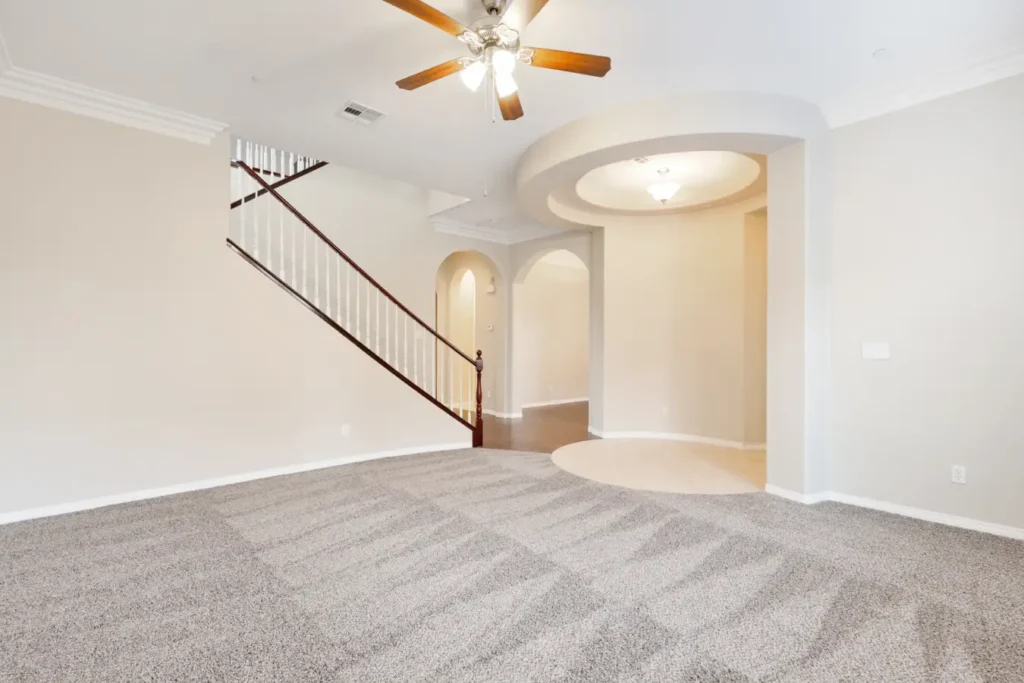
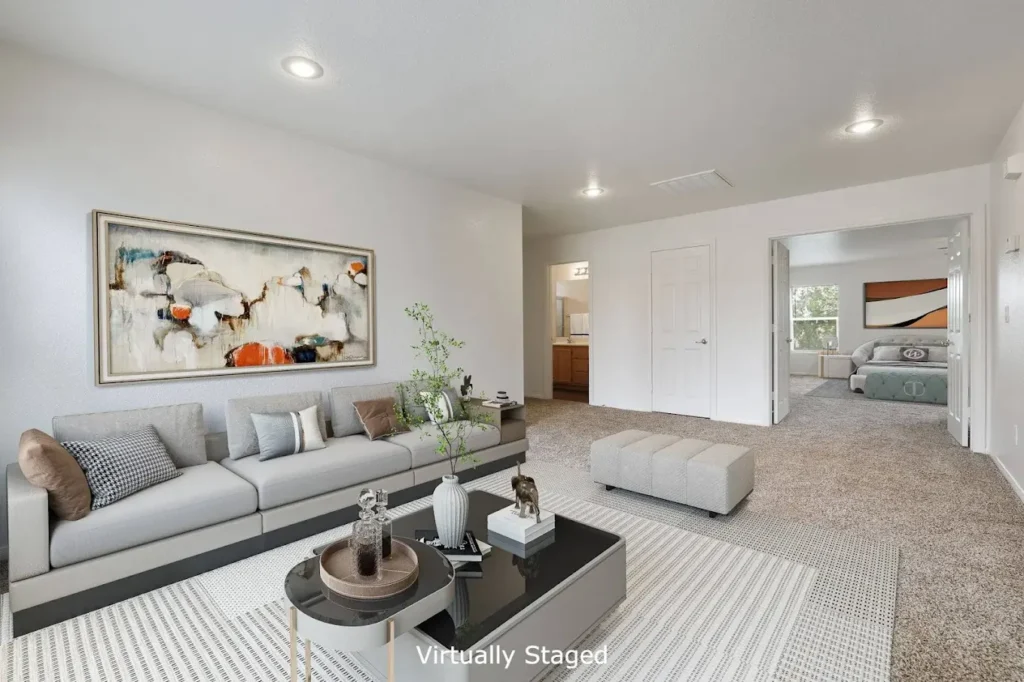
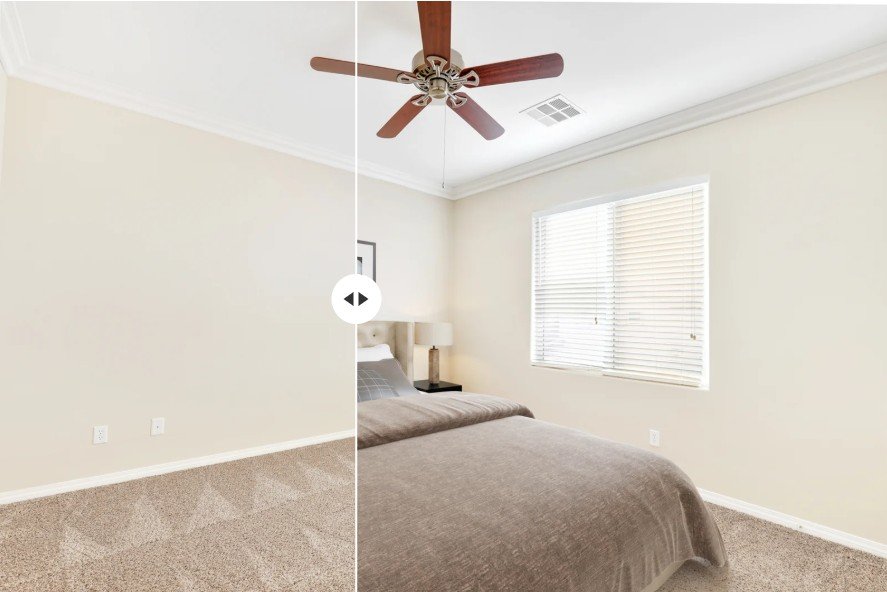
Virtual staging is the digital placement of furniture, decor, and sometimes lighting or flooring adjustments onto photographs of a real, existing room. A photographer shoots the space empty, and a designer then builds a rendered layout - a sofa, rug, coffee table, artwork - into that same photo so the room reads as lived-in rather than vacant.
It's worth separating from two things it often gets confused with:
- Physical staging rents and places actual furniture inside the home before photos are taken. It's the same end goal - a furnished-looking listing - but the furniture is real and the cost is ongoing for as long as the home sits on the market.
- AI-generated room images create a furnished-looking room from a text prompt or a generic template, sometimes without starting from the property's real photo. Quality virtual staging works directly from a photo of the actual room, so the dimensions, windows, flooring, and architecture in the final image match what a buyer will see in person.
Virtual staging also isn't a substitute for a full virtual tour. A Matterport 3D tour lets a buyer walk through the entire home room by room; virtual staging furnishes the still photos that appear in the MLS and on listing sites. Many Las Vegas listings use both - a staged hero photo to stop the scroll, and a 3D tour for buyers who want to explore further before booking a showing.
Virtual Staging Services in Las Vegas
Why Vacant Las Vegas Listings Need It More Than Most Markets
A big share of the properties that get virtually staged in Las Vegas are vacant for a specific reason: they're flips mid-renovation, rental turns between tenants, or out-of-state investment purchases that were never furnished to begin with. None of those situations lend themselves to physical staging, because the furniture would either be in the contractor's way or sit unused between tenants.
At the same time, a lot of the demand for these properties comes from buyers who aren't local. Relocation buyers and out-of-state investors decide which homes are worth a flight out or an in-person tour based entirely on what they see on their phone. An empty room, especially photographed under harsh midday desert light, tends to look smaller and less inviting on screen than it does walking through it - bare walls and bare floors give the eye nothing to judge scale against. Furnished photos give buyers a frame of reference and make the space easier to picture living in, which is what keeps them scrolling instead of moving to the next listing.
The style choice matters locally too. A Summerlin or Henderson home with an open desert-modern layout reads differently than a smaller tract home near Sunrise Manor or a high-rise unit near the Strip, and furniture scaled and styled for the wrong property type can undercut the effect instead of helping it.
How the Virtual Staging Process Works, Step by Step
Photograph the Empty Room the Right Way
Virtual staging starts with a real photo, not a floor plan or a rough phone snapshot. The room needs to be shot with a wide-angle lens at the correct height and with exposure balanced for both the interior and any windows, so the final staged image doesn't have blown-out light or distorted proportions. A photo that's already off - crooked, poorly lit, or shot from an odd angle - limits what a designer can realistically do with it later, so this step sets the ceiling for the final result.
Choose a Style That Matches the Home
Before any furniture goes in, the room's likely buyer and the home's actual architecture decide the design direction - modern desert, transitional, contemporary luxury, or a simpler rental-ready look for a lower price point. Matching the furniture style to the home matters more than picking whatever looks trendiest; a heavily styled luxury living room in a starter-home flip usually looks out of place rather than aspirational.
Digital Furniture Placement and Rendering
This is the design work itself. A designer maps the room's real dimensions, then places furniture, rugs, art, and lighting so the scale and shadows match the room's actual light source. Getting the shadows and proportions right is what separates staging that looks believable from staging that looks obviously pasted in - furniture floating without a matching shadow, or a sofa that's clearly too large for the wall it's against, are the two most common tells.
Review and Revisions
Before delivery, the staged images go through a review against the original photo - checking that outlets, light switches, flooring transitions, and window views still look natural, and that nothing structural has been altered or hidden. Reasonable revision requests (a different furniture color, a different layout) are a normal part of this step, not an extra service.
Delivery and MLS Upload
Finished images are delivered ready to drop into the MLS and listing syndication sites. A fast provider gets the entire process - shoot to finished renderings - turned around in 24 to 48 hours, which matters on a vacant property where every extra day on the market adds another day of holding costs.
Which Rooms and Property Types Benefit Most
Virtual staging isn't necessary in every room of every listing, but it consistently pays off in a few specific situations:
- Vacant flips. Buyers touring a freshly renovated flip need to see the finished vision, not a blank canvas - staged photos sell the "move-in ready" feeling the renovation was built around.
- Empty rental turns. Between tenants, a unit is empty anyway, and staged photos help it rent faster without paying to furnish a space no one will live in permanently.
- Awkward or ambiguous rooms. A bonus room, a flex space off the kitchen, or a den with no obvious purpose photographs far better once staging shows buyers what it could become - a home office, a playroom, a formal dining area.
- Large or oddly proportioned rooms. Bare rooms with high ceilings or unusual shapes are hard to judge from a photo; furniture gives the eye something to measure the space against.
- Higher-end vacant listings. On a luxury vacant property, buyers expect a lifestyle presentation, and an empty living room undersells a home that's otherwise priced at the top of the market.
Kitchens, bathrooms, and rooms that are already fully finished and photograph well as-is generally don't need staging - adding furniture where it isn't needed just adds cost without changing how the room reads to a buyer.
Virtual Staging and MLS Disclosure Rules
Virtual staging is legal and widely used, but it comes with a disclosure obligation that agents and sellers should take seriously. Under the National Association of REALTORS® Code of Ethics - specifically Articles 2 and 12, which govern accurate representation and truthful advertising - any photo that has been virtually staged needs to be clearly identified as such. Most MLS platforms carry the same requirement in their own listing rules, and the standard practice is a visible "virtually staged" label or watermark on each altered photo, along with a note in the listing remarks.
The reasoning is straightforward: a buyer deciding whether to drive out or book a flight based on listing photos deserves to know which images show the room as it currently exists and which show a rendered version of its potential. Staging that adds furniture and decor to an otherwise accurate photo is standard practice and not a problem. Staging that hides a structural issue, removes a wall, or otherwise misrepresents the property's actual condition crosses into misleading advertising and can create real liability for the listing agent. A reputable virtual staging provider will deliver images built for disclosure - furniture only, no alterations to the room's actual features - and won't push back on labeling requirements.
Common Mistakes That Make Virtual Staging Look Fake
Buyers can usually spot staging that wasn't done carefully, and a handful of mistakes account for most of it:
- Furniture that doesn't match the room's scale. An oversized sectional in a small living room, or a dining table that would never physically fit through the doorway, breaks the illusion immediately.
- Shadows and lighting that don't match the photo. If the room's real light comes from a west-facing window, the rendered furniture needs shadows falling the same direction - mismatched lighting is one of the fastest ways a staged photo reads as fake.
- Over-furnishing the room. Piling in every possible piece of furniture to fill space usually looks cluttered rather than lived-in; a room styled with restraint tends to photograph better than one styled to impress.
- A style mismatch with the neighborhood or price point. Ultra-modern furniture in a traditional tract home, or budget staging in a luxury listing, undercuts the buyer's trust in the rest of the photos.
- Skipping the disclosure. Beyond the compliance risk, buyers who show up to a showing and realize the photos didn't match reality tend to walk away with less trust in the rest of the listing.
Virtual Staging vs. Physical Staging: The Quick Version
The two approaches solve the same problem - an empty room that doesn't photograph well - in different ways. Physical staging places real furniture in the home, which means it also benefits in-person showings, but it requires renting and moving furniture and typically bills by the month for as long as the home is on the market. Virtual staging works from photos only, so it doesn't help someone walking through the property in person, but it's a one-time cost per room rather than an ongoing rental, and there's no furniture delivery or pickup to coordinate around a vacant property's schedule.
For a quick-turn flip or a rental unit that's likely to sell or lease within a normal marketing window, virtual staging usually covers the need without the logistics of physical furniture. For a listing expected to sit longer, or one where in-person showings are the main driver of offers, physical staging (or a mix of both) can make more sense. For a full cost breakdown by room and package, see how much virtual staging costs in Las Vegas.
How to Get the Best Results From Virtual Staging
A few things on the seller or agent's side make a measurable difference in the final images:
- Have the room fully cleared before the shoot. Leftover debris, tools, or moving boxes in an empty room limit what a designer can stage around.
- Flag any rooms with unusual layouts in advance. A designer working from a heads-up about an odd angle or a low ceiling can plan furniture placement accordingly instead of guessing.
- Ask for the style direction up front. Whether the target buyer is a young professional, a relocating family, or an investor targeting a rental audience changes the furniture choices - sharing that context leads to a better first draft.
- Confirm the disclosure and watermark setup before delivery. Get final files that already meet MLS labeling requirements rather than adding disclosure language after the fact.
Locally, Virtual Tours Las Vegas builds virtual staging around the actual room in the photo rather than dropping in generic stock furniture, styled to match Las Vegas and Henderson home types from desert-modern estates to standard tract layouts, with typical delivery in 24 to 48 hours.
Conclusion
Virtual staging turns a bare, hard-to-picture room into a photo that gives buyers a real sense of how the space could live - without the cost or logistics of renting physical furniture for a vacant flip or rental. Done correctly, it's a straightforward process: a well-shot empty room, furniture scaled and styled to match the home, a review pass, and delivery inside a day or two, with clear disclosure so the listing stays compliant. For a Las Vegas listing sitting vacant, that turnaround can be the difference between another week of holding costs and a showing booked this weekend. To get vacant rooms staged and delivered for your next Las Vegas listing, call (702) 527-2732.
FAQs
Is virtual staging legal for MLS listings in Las Vegas?
Yes. Virtual staging is legal and widely used, but it needs to be disclosed. Photos should carry a visible "virtually staged" label, and the listing remarks should note that some images have been digitally furnished. The staging itself should only add furniture and decor - not hide defects or alter the room's actual structure.
Does virtual staging work on occupied homes, or only vacant ones?
It's built specifically for vacant or under-furnished rooms. An occupied home with existing furniture typically needs traditional real estate photography, or in some cases "virtual redesign," where existing furniture is digitally replaced - a different service from staging an empty room.
How long does virtual staging take from photos to finished images?
Turnaround varies by provider, but a standard delivery window is 24 to 48 hours from the photo shoot to finished, MLS-ready images, which keeps a vacant listing from sitting dark while renders are completed.
Can virtual staging fix bad or outdated photos?
Staging can furnish a room, but it can't correct a poorly exposed or distorted original photo. Professional real estate photography with proper lighting and lens work is the foundation that staging builds on top of, not a replacement for it.
Does virtual staging replace the need for professional real estate photography?
No - staging is an enhancement applied to a real photo, not a stand-alone service. The room still needs to be shot correctly first; staging is added to that photo afterward.
Can virtual staging be used alongside a Matterport 3D tour?
Yes, and the two are commonly used together. Staged still photos work well for the MLS thumbnail and listing sites, while a Matterport tour lets remote buyers walk the full property before deciding whether an in-person showing is worth the trip.