

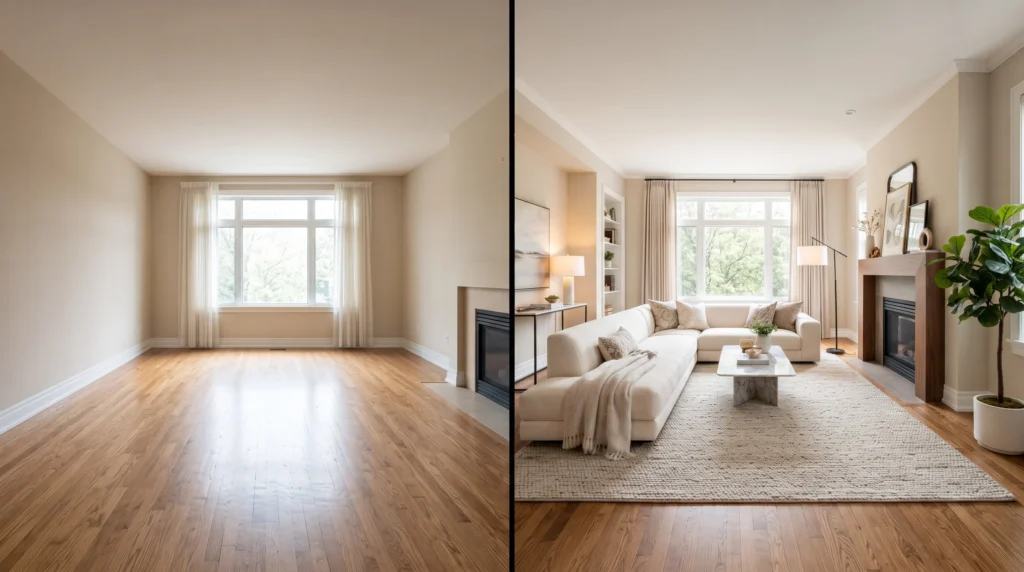
Virtual staging usually costs a fraction of what physical staging does, which is the whole reason it has taken over vacant-listing marketing. Where renting real furniture can run into the thousands of dollars every month, furnishing a room digitally is a one-time charge per photo, and the math almost always favors the digital route for empty homes. The exact figure depends on how many images you need, the type of rooms, and how polished the work has to be.
This guide lays out how virtual staging is priced, what pushes the cost up or down, how it compares to traditional staging on real numbers, and how to budget the spend across a Las Vegas listing without overpaying or cutting corners that buyers notice.
How is virtual staging priced?
Most virtual staging is priced per photo, not per room or per home. You pick the empty-room images you want furnished, and you pay a set fee for each one. A single listing might furnish anywhere from three to eight photos, depending on the property and which spaces actually drive buyer decisions.
There are two common billing structures. The first is straight per-image pricing, where each furnished photo carries the same flat rate. The second is package pricing, where a provider bundles a set number of staged images, sometimes alongside the property's photography and other media, at a combined rate that works out cheaper per photo than buying them one at a time. For a seller staging a handful of rooms, per-image pricing is simple. For an investor running listings regularly, a package or bundled rate usually delivers better value.
As a general industry reference, professional virtual staging commonly falls somewhere in the range of roughly $25 to $75 per image, with premium or rush work landing higher. Treat that as a ballpark, not a quote. Local rates, quality, and turnaround all move the number, which is why most providers, including Virtual Tours Las Vegas, give a free quote based on the actual photos and scope.
What drives the price up or down?
Two listings with the same room count can carry different staging costs, and the difference comes down to a handful of factors.
- Number of images. The clearest driver. Three furnished photos cost less than eight. Spending where buyers decide, rather than furnishing every room, keeps this in check.
- Room type and complexity. A simple bedroom with a bed, nightstands, and art is quick. A large open-concept great room that needs multiple furniture zones, a living area, a dining set, a reading corner, takes more design work and often costs more.
- Style and realism level. Basic, template-driven staging is cheaper. High-end, photorealistic work with custom furniture selection, accurate shadows, and reflections sits at the top of the range because it takes a skilled designer real time.
- Turnaround speed. Standard delivery is built into most rates. Rush jobs that jump the queue can carry a premium.
- Revisions. Some providers include a round or two of edits; others charge per revision. Worth confirming up front so a couch swap does not become a surprise line item.
Virtual staging vs physical staging: the real numbers
The cost contrast is the strongest argument for going digital, and it is worth seeing side by side rather than in the abstract.
| Numbers | Physical staging | Virtual staging |
| Pricing model | Monthly furniture rental + labor | One-time fee per photo |
| Typical spend | Often $2,000–$6,000+ over a listing | A small fraction of that |
| Duration cost | Climbs every month on market | Fixed regardless of days listed |
| Logistics | Delivery, installation, removal | None on the physical home |
| Risk | Damage, theft, wear | No physical exposure |
The number that really matters is not the invoice; it is the cost per month on the market. Physical staging keeps billing for as long as the home sits unsold, so a listing that lingers gets more expensive by the week. Virtual staging is locked in at one fixed cost no matter how long the listing runs. On a vacant flip or a rental between tenants, where holding costs already eat the margin, that fixed-versus-recurring difference is decisive.
Is virtual staging worth the cost?
For the right property, the return is easy to justify. The point of staging is to lift buyer engagement, and furnished listing photos consistently pull more clicks, saves, and showing requests than empty rooms. More engagement shortens time on market, and for a property carrying a mortgage, taxes, insurance, and utilities, every week saved is real money kept.
Run the rough math. If staging a listing costs a few hundred dollars and helps the home sell even one or two weeks sooner, the holding costs avoided usually dwarf the staging fee. On top of that, staged homes can attract stronger offers, because buyers who connect emotionally with a space tend to bid more confidently. Against those upsides, the cost of furnishing a few photos is modest.
Where it is not worth it: a small, simple, well-photographed home that already shows clearly empty, or an occupied luxury property where in-person buyers will judge real furniture. Match the spend to the situation.
Free apps and cheap services vs professional staging
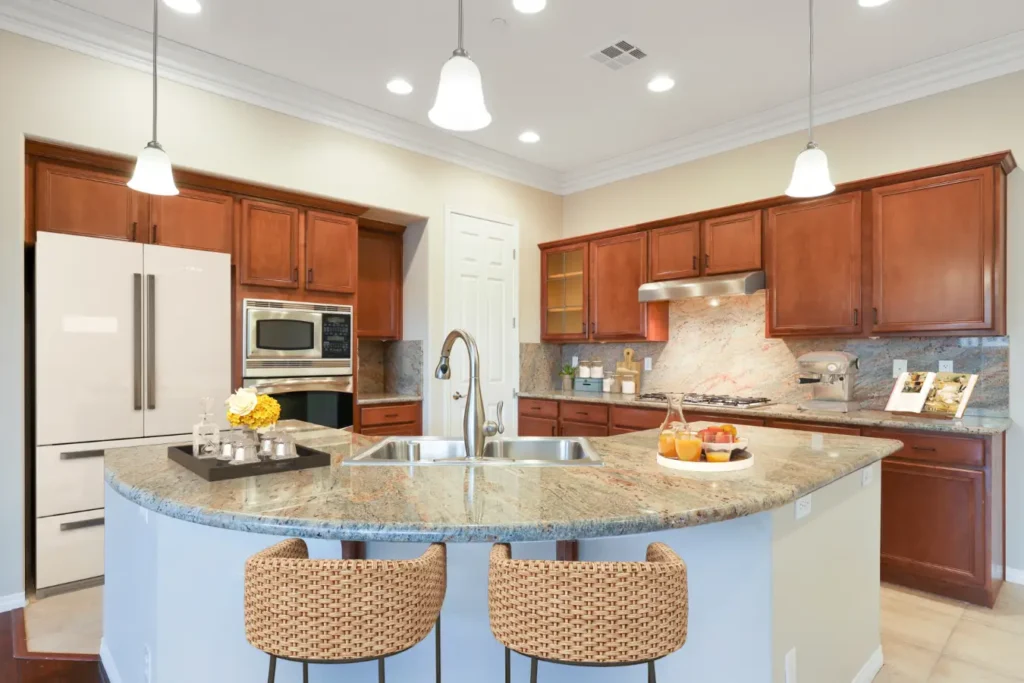
A search for low-cost virtual staging turns up free apps and bargain overseas services, and it is fair to ask why anyone pays more. The answer shows up in the final image. Cheap and automated staging tends to warp perspective, place furniture that ignores the room's real lighting, and pull from a thin library of generic pieces. The render looks edited, and an edited-looking photo casts doubt on the entire listing.
Professional virtual staging costs more because it includes things the bargain options skip: a properly lit base photograph to begin with, furniture scaled to the room's true dimensions, shadows and reflections matched to the existing light, and a style chosen to suit the buyer. For a listing that represents hundreds of thousands of dollars, the few hundred saved on cut-rate staging is a poor trade against the credibility it can cost. The professional version is an investment in the listing; the cheap version is often a quiet liability.
Hidden costs to watch for
A low headline price does not always mean a low final bill. Before booking, check for the line items that catch sellers off guard.
- Revision fees. Confirm how many rounds of edits are included and what extra ones cost.
- Rush charges. If you need images fast, ask whether expedited delivery carries a premium.
- Re-staging charges. If you later want a room restyled for a different buyer, is that a fresh full fee or a discounted edit?
- Photography not included. Staging needs a clean base photo. If the provider does not shoot the property, you may need separate real estate photography, which is simpler and more consistent when one team handles both.
- Usage limits. Reputable providers let you use the images freely on the MLS and portals; confirm there are no odd licensing restrictions.
How to budget virtual staging across a listing
The efficient approach is to decide which rooms move buyers, furnish only those, and bundle the staging with the rest of the listing's media so the per-item cost drops.
Most listings get the strongest return from staging the living room, the primary bedroom, and the kitchen or dining area, plus any awkward space that confuses buyers when empty. That is often three to five images, which keeps the total reasonable while covering the rooms that actually drive decisions. Secondary bedrooms, hallways, and bathrooms can usually stay unfurnished. Booking the staging in the same order as your photos, floor plan, and Matterport 3D tour keeps everything consistent and tends to bring the combined price down compared to ordering each piece separately.
Does the cost change by property type?
The per-image rate stays fairly steady across property types, but the total spend shifts with how many rooms a listing needs furnished and how complex they are.
- Condos and small homes. Often the cheapest to stage. Fewer rooms and tighter layouts mean three or four images usually cover the spaces that matter, so the total stays low.
- Single-family resales. The middle of the range. A typical family home benefits from staging the main living area, the primary bedroom, and the kitchen or dining space, landing around four to five images.
- Luxury listings. Higher total, though not because the per-image rate jumps dramatically. High-end buyers expect a refined look, so the design work is more involved, and larger homes have more decision-driving rooms worth furnishing.
- Vacant rentals and flips. Usually the best value per dollar, because these listings lose buyers fastest when shown empty and gain the most from a warm, furnished look. Investors running several at once also tend to negotiate better package rates.
- Commercial spaces. Priced case by case. An office or retail unit may need furnishing that signals function rather than home comfort, and the scope varies widely by venue.
The takeaway is that property type matters less than room count and complexity. A small luxury condo can cost less to stage than a sprawling empty single-family home, simply because there are fewer rooms to furnish.
What you get from a professional Las Vegas provider
Pricing only makes sense next to what the money buys. Virtual Tours Las Vegas has worked this market since 2010 under owner and sole photographer Mike Madsen, who personally handles each shoot across the Las Vegas Valley, North Las Vegas, Henderson, and Boulder City.
Because he captures the base photography himself, the empty-room images feeding the staging are properly lit and color-accurate from the start, which is what makes the furnished result believable rather than obviously edited. Furnishings are matched to local desert-modern and tract-home architecture instead of generic stock, staged images come back inside a 24 to 48 hour window, and exact pricing comes from a free quote based on your actual photos and room count. You can review the scope and examples on the virtual staging services in Las Vegas page.
Frequently asked questions
How much does virtual staging cost?
Virtual staging is usually priced per photo. As a general industry range, professional work commonly runs roughly $25 to $75 per image, with premium or rush jobs higher. The final cost depends on the number of images, room complexity, style level, and turnaround, so most providers give a free quote based on the actual photos.
Is virtual staging cheaper than physical staging?
Yes, by a wide margin. Physical staging rents real furniture for thousands of dollars a month over the listing, while virtual staging is a one-time fee per photo. For vacant homes, the savings are substantial.
How many photos should I virtually stage?
Most listings see the best return from staging three to five key images, typically the living room, primary bedroom, and kitchen or dining area, plus any awkward empty space. Furnishing every room is rarely necessary.
Why is professional virtual staging more expensive than free apps?
Professional staging includes a properly lit base photo, furniture scaled to the room, shadows matched to real light, and a buyer-appropriate style. Free or cut-rate options often warp perspective and look edited, which can undermine the whole listing.
Does virtual staging save money overall?
For vacant listings, usually yes. The fixed staging fee is small against the holding costs avoided when a furnished listing sells faster, and staged homes can attract stronger offers.
What affects the price of virtual staging the most?
The number of images is the biggest factor, followed by room complexity, the realism and style level, turnaround speed, and whether revisions are included in the quoted rate.
Get an exact quote for your listing
Industry ranges are a starting point, but the real number depends on your specific rooms and photos. For accurate pricing on virtual staging services in Las Vegas NV, call Mike Madsen at (702) 527-2732 for a free quote and get styled, buyer-ready images back fast, usually within a day or two.